Worried about getting stuck or tipping on a wet trail? Here is how to ride an ATV through mud and water: check the depth, go slow and steady, keep your feet on the footrests, and stay on designated trails.
This page belongs to the wider guide on how to ride an atv, and it covers wet-trail skills only.
| Item | Guidance |
|---|---|
| Water depth limit | Never deeper than the maximum depth in your owner’s manual |
| Speed through water | Slow and steady |
| Feet | Firmly on the footrests |
| Four-wheel drive | Engaged in low gear |
| After the crossing | Test the brakes on dry land |
| Rivers, streams, lakes and wetlands | Described as illegal in state study guides |
The guidance above follows the study guides for Indiana and Wisconsin. Rules and recommendations can change, so check those pages and your owner’s manual before you rely on them.
Check where you are allowed to ride first
The Wisconsin study guide states that riding through rivers, streams, lakes, and wetlands is illegal, causes environmental damage, and hurts fish and wildlife. The Arizona guide goes further and calls it illegal, unethical, and irresponsible.
That leaves a narrow range of wet riding. The Wisconsin guide limits legal water riding to puddles on trails and to water hazards or mud pits at designated ATV parks, so a deep creek is not a trail feature.
Rules differ from place to place. For questions about what is legal where you ride, ask the local land manager or the relevant authority, because this site cannot give legal advice.
- Stay on designated trails and other authorized riding areas.
- Treat a closed trail as off limits, however dry it looks.
- Look for park-run water hazards if you want to practise in deeper water.
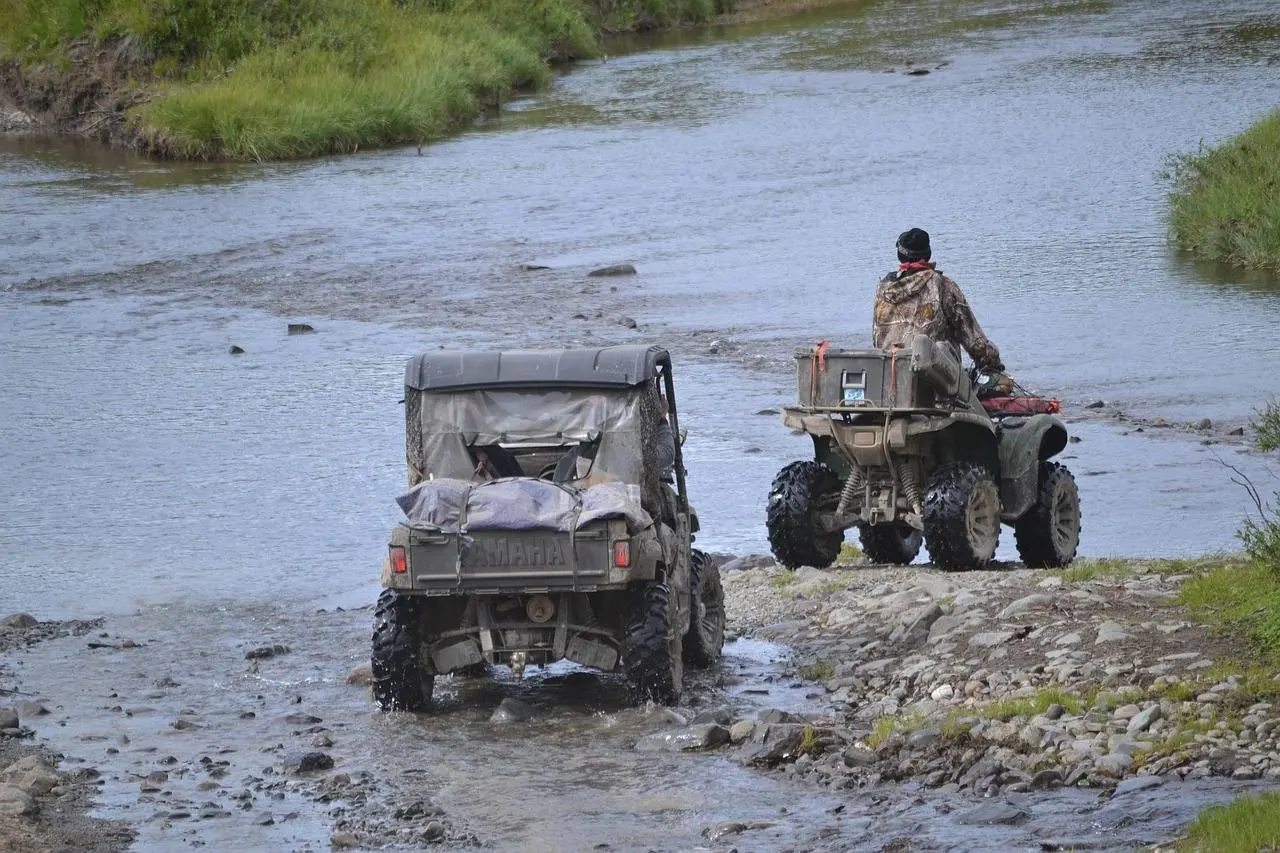
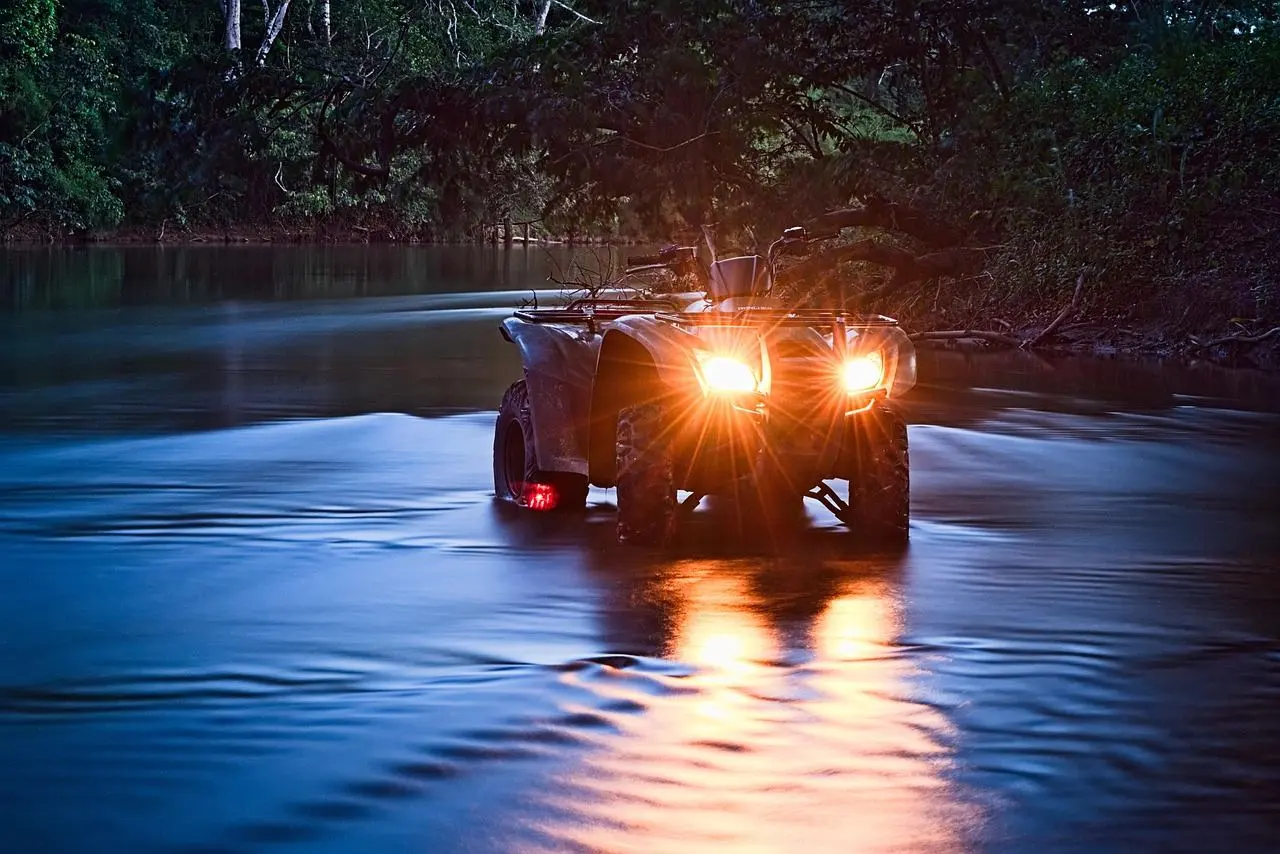
Crossing a puddle or low-water crossing, step by step
Trail riders do meet puddles and low-water crossings. The Ohio guide and the other state guides in this pack give the same short routine, which works best when you follow it in order.
- Stop and judge the depth. Determine the depth of the water before you cross, as the Indiana guide advises.
- Compare it with your limit. Do not drive into water deeper than the maximum depth specified in your owner’s manual.
- Set your feet. Keep them firmly on the footrests, which may become slippery.
- Check the drive mode. If your quad has four-wheel drive, make sure it is engaged in low gear, per the Oregon guide.
- Roll in slowly. Keep a slow, steady speed so you can spot submerged obstacles and slippery rocks.
Keep watching above the surface as well. The Wisconsin guide tells riders to stay alert for obstacles above the water, such as branches or debris near the crossing.
Why a steady pace beats a fast run
Many riders assume momentum carries a quad through water. The Indiana guide says the opposite: driving across water at high speed may cause you to hydroplane, lose steering control, and roll over.
A slow pace also gives you time to read the bottom. Submerged rocks and holes are hard to see, and a steady throttle lets you react before a wheel finds them.
Wheelspin is the other habit to drop. The same guide says spinning your wheels disrupts streambeds and erodes banks, so smooth throttle is kinder to the crossing as well as to you.
Riding through mud without wrecking the trail
Mud is a trail-health issue as much as a skill issue. The Wisconsin guide warns that riding in extremely muddy conditions can cause severe trail damage and maintenance issues.
Before a spring ride, find out whether the trail is open. The guide advises checking with local authorities for spring trail opening dates and emergency trail closures.
When you do ride a wet section, keep the same habits you use at water crossings: a calm, steady pace, smooth inputs and feet planted on the footrests. If you load the quad with gear, read about atv towing capacity and cargo first, since weight changes how it behaves on slick ground.
Wet trails often run along slopes too, and the techniques in the guide to how to ride an atv on hills apply there as well.
What to do on the far bank
Once you reach firm ground, test your brakes. The Indiana guide gives this as the last step of a crossing, and it is quick to do before you pick up speed again.
Then look over the machine and your gear, and rejoin the trail. Your owner’s manual remains the best reference for anything specific to your model, including depth limits and drive settings.
Frequently asked questions
Can I ride my ATV across a river or lake?
Show answer
The state guides treat it as a violation and an environmental harm, so the safe answer is no. If you are unsure about a particular place, ask the land manager or the local authority; the Arizona guide describes such riding as unethical as well.
How deep is too deep for a crossing?
Show answer
Your own limit is whatever your owner’s manual states as the maximum depth. The Ohio guide says not to enter water deeper than that figure.
Should I use four-wheel drive in water?
Show answer
If your quad has it, the Oregon guide says to have it engaged in low gear. Check your manual for how your model does this.
Can I ride a muddy trail any time of year?
Show answer
Not necessarily. Trails can have spring opening dates and sudden closures, and the Wisconsin guide recommends asking local authorities before you go.