Wondering how to ride an ATV without getting in over your head? Start with a recognized training course, a machine that fits your body, proper gear and unpaved ground. Everything else builds on those four.
| Item | Value |
|---|---|
| Reported US ATV-related deaths since 1985 | Over 8,000 deaths |
| Seat-to-inseam clearance while standing on the foot pegs | 3 to 6 inches (minimum) |
| Riders under age 16 | Ride with an adult |
| Riders under 18 | Always ride with an adult |
| Recommended training | A recognized ATV course |
These figures come from Mississippi State University Extension, which cites the U.S. Consumer Product Safety Commission for the death count. Figures and recommendations can change, so check the source before you rely on them.
Start with training, not throttle
Before you start the engine, the first job is to learn the machine. The Mississippi State University Extension publication advises taking a recognized ATV course, such as the one offered by the ATV Safety Institute. The site’s guide to finding an atv safety course goes into more detail.
According to the same source, a course teaches you how to start and stop, how to handle obstacles and other critical skills. It also says well-trained riders can better handle obstacles, trails and their machines.
The publication also gives a reason for the emphasis on education. It notes that the U.S. Consumer Product Safety Commission reports over 8,000 ATV-related deaths have occurred in the United States since 1985. The under-16 age group has one of the highest numbers of estimated injuries, according to the same publication.
Age matters as well. The publication says riders under age 16 should ride with an adult, and riders under 18 should always ride with an adult. It also says to follow the manufacturer’s minimum age recommendation warning label on the ATV; for the legal side, ask your state’s relevant authority.
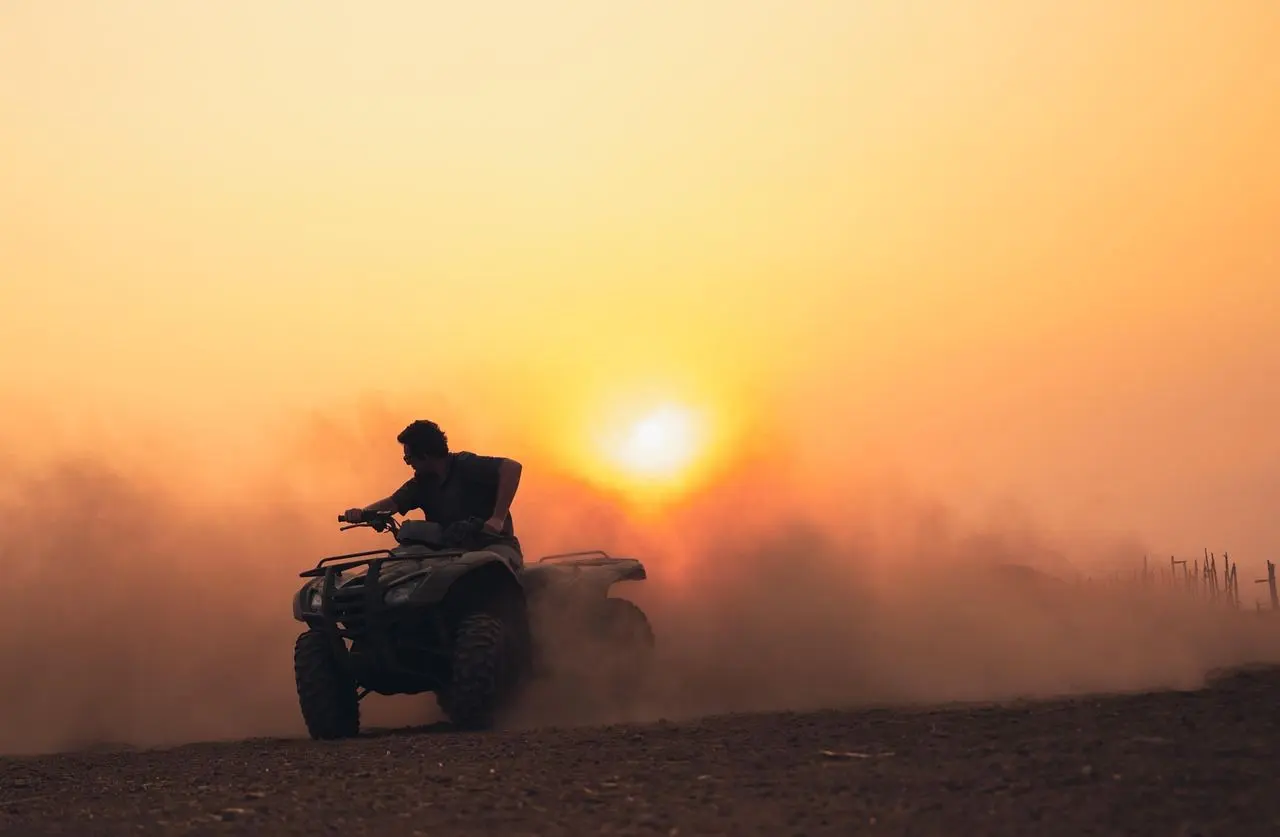
How do you know an ATV fits you?
A machine that is the wrong size is harder to control, so the source lists several fit checks you can run while sitting on the ATV. The first is clearance: the publication says the minimum gap between seat and inseam, while you stand on the foot pegs, should be 3 to 6 inches. That space lets you stand and absorb shocks through your legs on rough terrain.
The other checks from the same publication are these:
- Upper legs: the stretch from the top of the knee to the hip should be about horizontal. If your knees sit well above your hips, turn the handlebars both ways and look for contact with your legs.
- Foot length: with your heel against the foot peg, your toe should be able to press the footbrake with a simple downward rotation of the foot, without touching engine or exhaust parts.
- Grip reach: your elbows should show a distinct angle between upper arm and forearm. Straight elbows mean you won’t be able to turn the handlebars.
- Throttle reach: your thumb should operate the throttle easily, including with the handlebars turned fully left and right.
- Brake reach: the first joint of your middle finger should extend beyond the brake lever, and your thumb should also reach the engine stop switch.
Large differences on any of these should be checked by an adult, the source says. If several checks fail, the machine may simply be the wrong size, and the guide on how to buy an atv is a sensible place to compare options.
Gear to put on before you start
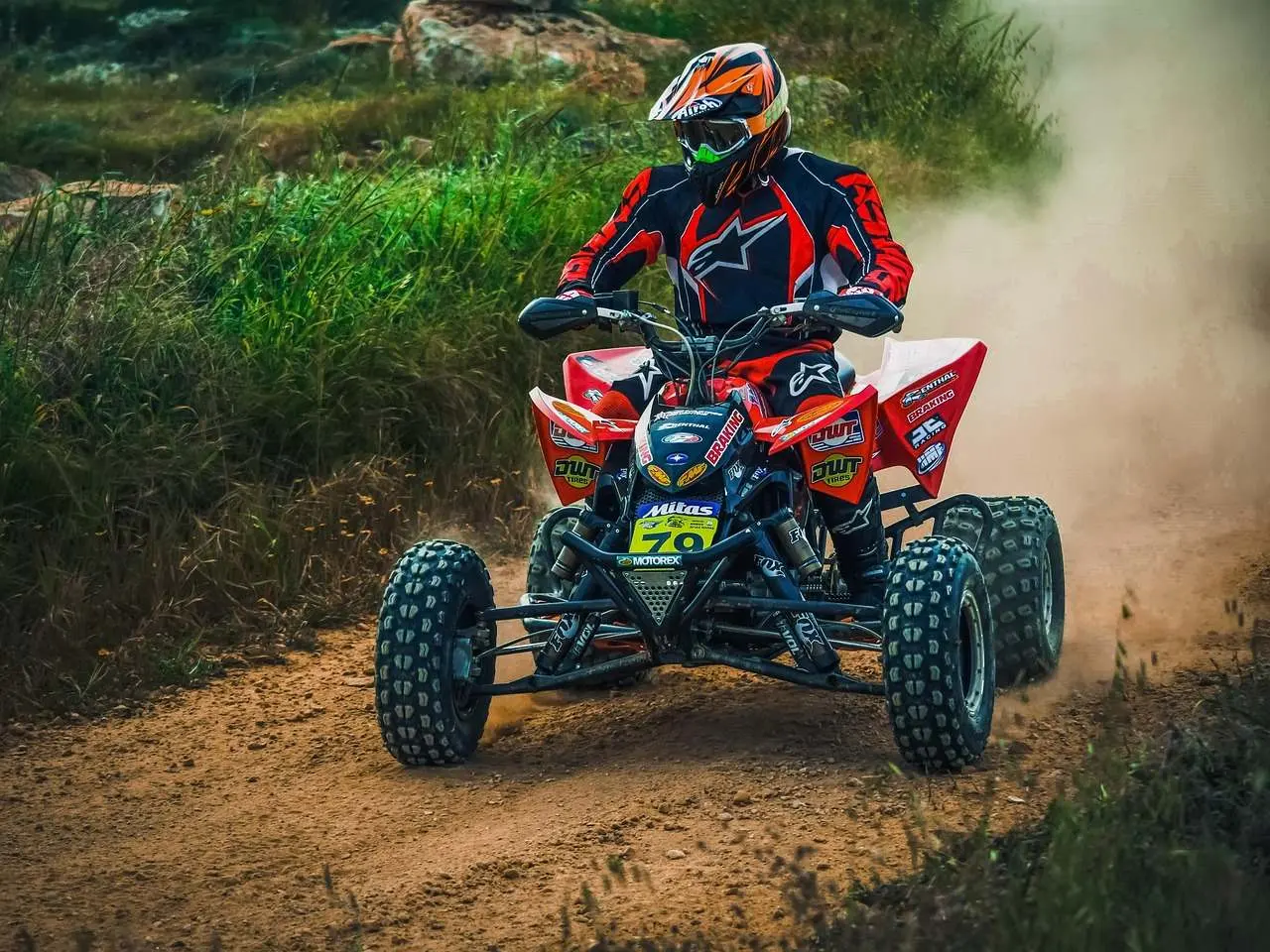
The source is blunt about the helmet: always wear one. It should be specially approved for ATV use, so don’t just grab your bicycle helmet. A dedicated guide to choosing an atv helmet goes further.
The publication adds that you should also wear:
- eye protection
- boots
- gloves
- other riding gear
A fuller checklist is in the guide on what to wear when riding an atv.

Riding habits that keep you in control
On an ATV you use your own weight to balance and steer, so most of the advice in the source comes down to staying in control. These habits come straight from it:
- Stay on unpaved trails. ATV tires are made to grip dirt better, and paved surfaces are meant for automobiles.
- Ride without passengers. You can’t know how a passenger will move, and subtle shifts can make you lose control.
- Keep your speed low enough to handle surprises, such as an animal darting across the trail.
- Skip jumps, wheelies and other stunts. The publication says they put fate in control, not you.
- Ride with a clear head. If you ride while drinking alcohol or using drugs, you may never reach your destination.
The one exception to the no-passenger rule is a two-up, or tandem, ATV, which can handle one rider and one passenger. The passenger must be big enough to plant their feet on the footrests and grip the hand holds. The source also lists a DOT-compliant or quality helmet and protective gear, and the right to tell the operator to slow down or stop.
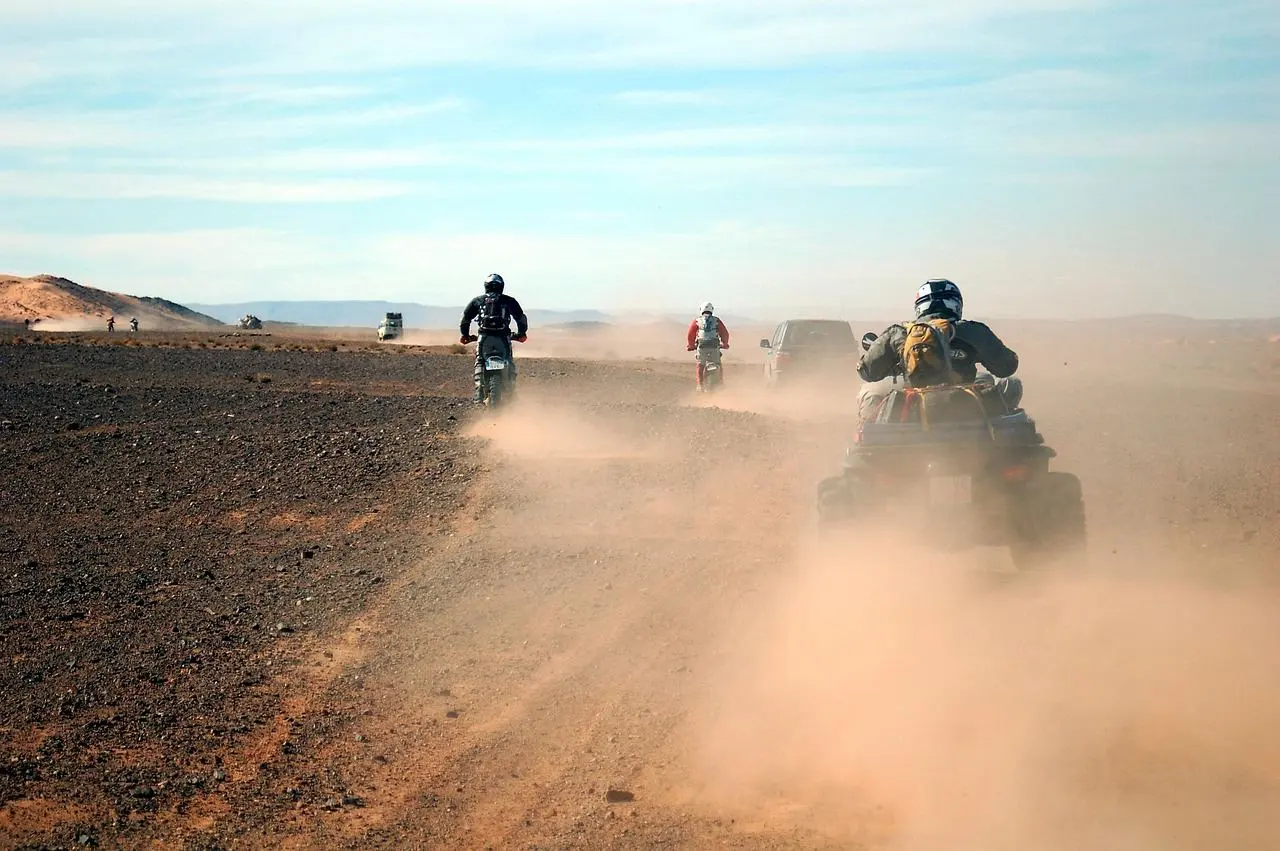
Some situations call for their own techniques, which the site covers separately:
- Steep ground is explained in the guide on how to ride an atv on hills.
- Wet and soft surfaces are covered in the guide on how to ride an atv through mud and water.
- Hauling is the subject of the guide to atv towing capacity and cargo.
- Riding with others is the subject of the guide to atv group riding etiquette.
Keeping the machine in good working order is a separate topic, covered in the guide to atv maintenance.
Know the trail and the rules
If you ride the same trail again and again, you know its turns and grooves and meet few surprises. On a new trail, the source says to scout it first, looking for logs, drop-offs and other dangers.
The publication also says every state has different laws about where to ride, how old you must be to ride and which type of training you need. Your state’s relevant authority is the place to confirm the rules, and the guide on where can i ride my atv is a starting point for thinking about locations.
A sensible order for your first rides
- Take a recognized ATV course.
- Check that the machine fits you, using the checks above.
- Put on a helmet made for ATV use, plus eye protection, boots and gloves.
- Stay on unpaved ground you know, and ride alone unless the machine is a two-up.
- Scout any new trail before you ride it, and confirm the local rules.
Frequently asked questions
Do I really need a course before I ride?
Show answer
The Extension publication puts a recognized course first in its safety tips and adds that you do need training. Requirements differ by state, so confirm yours with the relevant state authority.
Can I ride an ATV on paved roads?
Show answer
The source says paved surfaces are for automobiles, bicycles, skateboards and skates, and that ATV tires are built for dirt. Whether road use is allowed where you live is a question for your local authorities.
Can a friend ride behind me?
Show answer
Only on a two-up model made for a rider and one passenger. On a single-rider machine, a second person changes how the vehicle balances, which is why the source says to ride alone.
What does a younger rider need to know?
Show answer
The publication tells riders under age 16 to have an adult along and to use their own correctly sized ATV rather than a parent’s. Riders under 18 should always ride with an adult. Check the manufacturer’s label and your state’s rules as well.