Heading out on your quad and unsure what to look over first? An atv pre-ride inspection checklist starts with a walk-around: wheels and tires, fluids, brakes, lights, loose parts, cargo and protective gear. Fix anything critical before you start the engine.
This checklist sits inside the wider guide on how to ride an atv, which covers the riding skills that come after the machine passes its check.
| Check | What to look for |
|---|---|
| Inspection basis | Follow the equipment manufacturer’s specifications before operating |
| Wheels and tires | Look for nicks, cuts, gouges, missing lug nuts, proper inflation and tread condition |
| Fluids | Check for leaks, puddles and unusual odors or noises |
| Brakes | Work smoothly without noise or pulling |
| Lights | Headlamps, tail lamps, brake lights and turn signals operate |
| Critical fault found | Equipment must not be used until repaired |
These points come from Kansas State University’s ATV/UTV safety page. Requirements can change, so check that source and your own owner’s manual before you rely on them.
Why a walk-around comes before every ride
Kansas State University’s safety page says operators must be educated and responsible so they can prevent injuries, and it names failure to inspect prior to use in the same list as overturns, steep or uneven terrain and not keeping body parts inside the machine. The page is written for university staff, but the habit applies to any rider. K-State’s page is the source for that wording.
Manufacturers say the same thing in their own words. A Polaris owner’s manual for a Sportsman model lists a safety warning titled “Failure to Inspect Before Operating”, and it also has a dedicated Pre-Ride Checklist section. You can see both in the Polaris online manual.
Start with the manual, then walk around the machine
K-State’s wording is that a pre-use inspection should be done in accordance with the manufacturer’s specifications before the vehicle is operated. Treat any general list, including this one, as a baseline and let your own manual decide the details. The source is K-State’s inspection section.
The same page says to walk around the vehicle and inspect it carefully by eye. A simple order keeps you from skipping steps:
- Walk once around the whole machine and look for obvious damage.
- Check each wheel and tire.
- Check fluids and look for leaks.
- Test lights and look at mirrors, if your quad has them.
- Test the brakes and the parking brake.
- Check for loose parts, debris and unsecured cargo.
- Check your protective gear.
Wheels, tires and fluids
For wheels and tires, K-State asks you to look for nicks, cuts and gouges, and it also lists missing lug nuts, proper inflation and the condition of the tread. Polaris lists “Improper Tire Maintenance” as its own safety warning in the same Sportsman manual, which shows how seriously manufacturers treat tires. The relevant pages are K-State’s checklist and the Polaris manual.
- Nicks, cuts and gouges in the sidewall or tread
- Missing lug nuts
- Proper inflation, as set out in your manual
- Condition of the tread
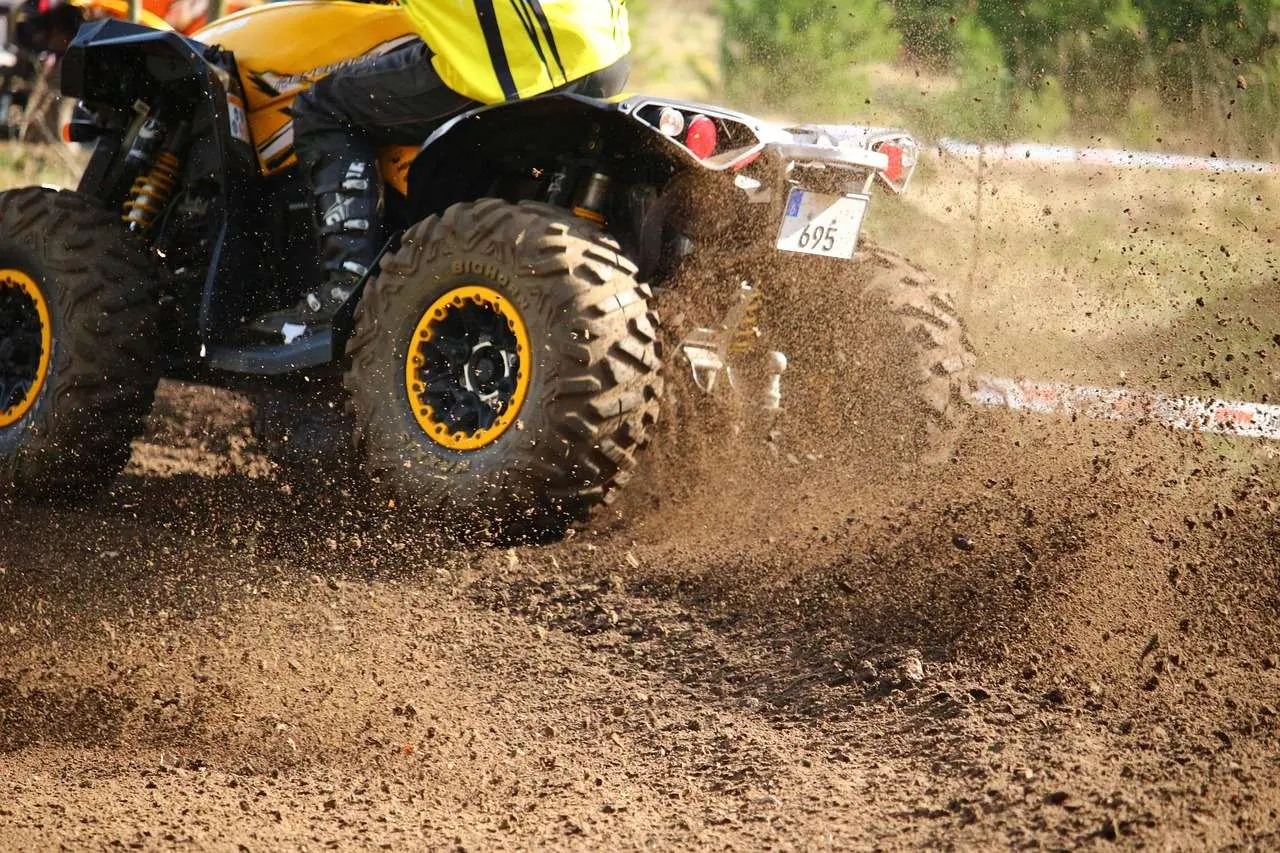
Fluids come next. According to K-State, vehicle fluids should be at proper levels, and you should check for leaks, puddles, unusual odors or noises and other signs of a problem. A fresh puddle under the machine is worth investigating before the ride, not after it.
Brakes, lights and mirrors
On brakes, K-State’s checklist says they should work smoothly, without noise or pulling. It adds that you should make sure the parking brakes hold. Both points are on the K-State page.
The same list covers lights: headlamps, tail lamps, brake lights, turn signals and similar items should all work. Side and rear view mirrors should not be cracked, fogged, loose or dirty. Because K-State’s list is written for many vehicle types, it also says to ensure the presence and operation, as applicable, of safety devices, so check only what your own quad is fitted with.
Loose parts, debris, cargo and gear
Walk the machine once more with a different question: what looks loose, missing or damaged? K-State’s list includes the following items, all on its ATV/UTV page:
- Loose or missing parts
- Visibly defective items or damage
- Debris such as mulch, seeds, grass or hay, cleaned off to prevent fire hazards
- Equipment, cargo and supplies that are adequately secured
- The personal protective equipment required to operate the vehicle
For protective gear, the Polaris manual’s safety chapter has sections on helmet, eye protection, gloves, boots and clothing. Read those sections in your own manual and match your kit to them. The headings can be seen in the Polaris online publication.
What to do when something fails the check
K-State’s note is blunt: if a violation critical to safe operation turns up, the equipment must not be used until repaired. In its workplace setting, the finder reports it, hands over the keys to prevent use by others and places a tag on the steering wheel marked “DO NOT USE” or “EQUIPMENT OUT OF ORDER”. All of this is on K-State’s safety page.
On your own quad, the same logic holds: park it, take the key out and do not ride until the fault is fixed. For repairs, rely on your owner’s manual or a qualified technician.
Once the machine passes, read about atv group riding etiquette if you ride with others. Your route matters too, so ask the land manager or local authority where can i ride my atv in your area.
Frequently asked questions
Do I really need to inspect my ATV before every ride?
Show answer
K-State’s page uses the word “always” for a pre-use inspection before the vehicle is operated, so the safe habit is to check each time you go out. Details are on the K-State ATV/UTV page.
What if my manual’s list differs from a general checklist?
Show answer
Your manual wins. The general list is a starting point, and the manufacturer’s own pre-ride section describes what applies to your model, as the Polaris manual example shows.
Is there a ready-made checklist I can print?
Show answer
K-State’s resource list points to an ATV Safety Institute T-CLOC pre-ride inspection checklist and to manufacturer owner’s manuals. Search for those by name, and check them against your own machine. The list is on the K-State page.
How do I know whether a fault is critical?
Show answer
K-State’s note refers to violations “critical to safe operation” without listing every case. If you are unsure, treat the quad as unfit to ride and ask a qualified technician or the manufacturer. For injuries or the law, contact the relevant professional or authority.