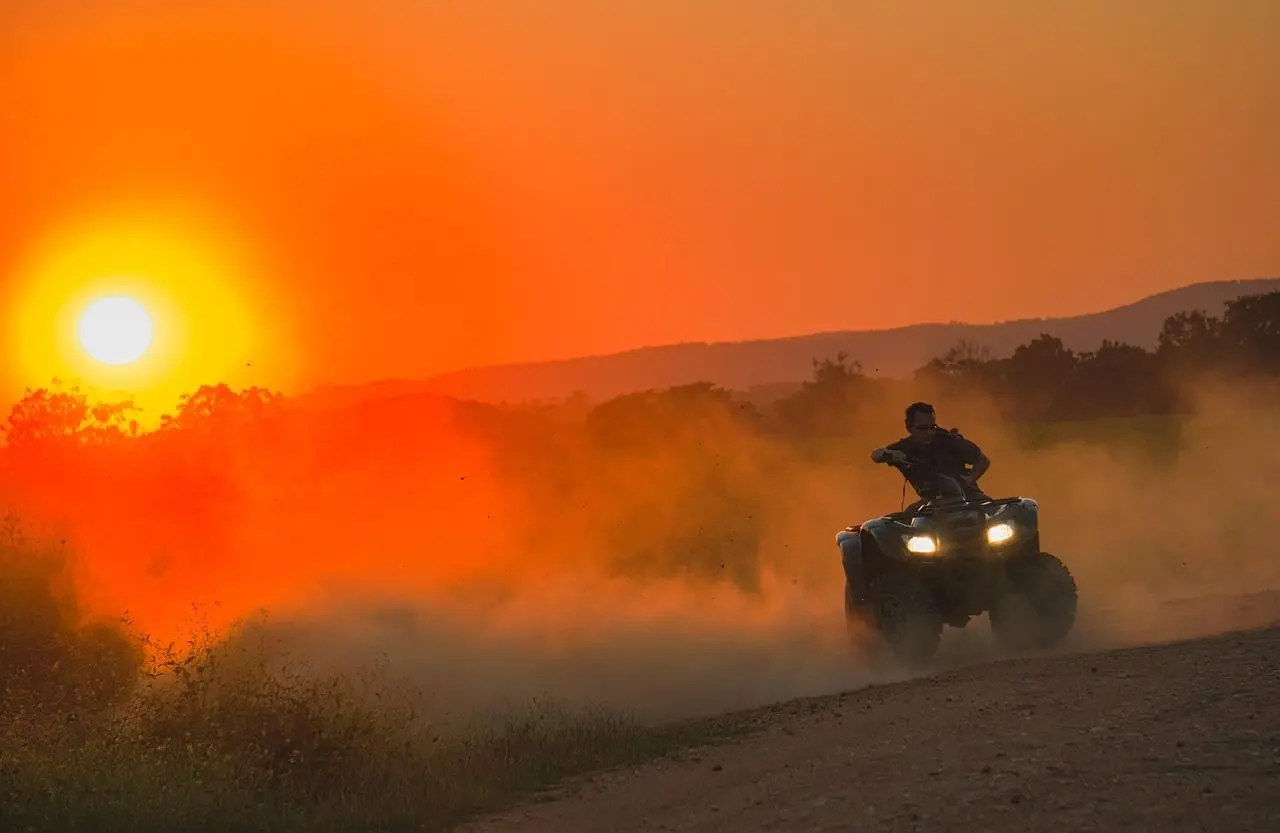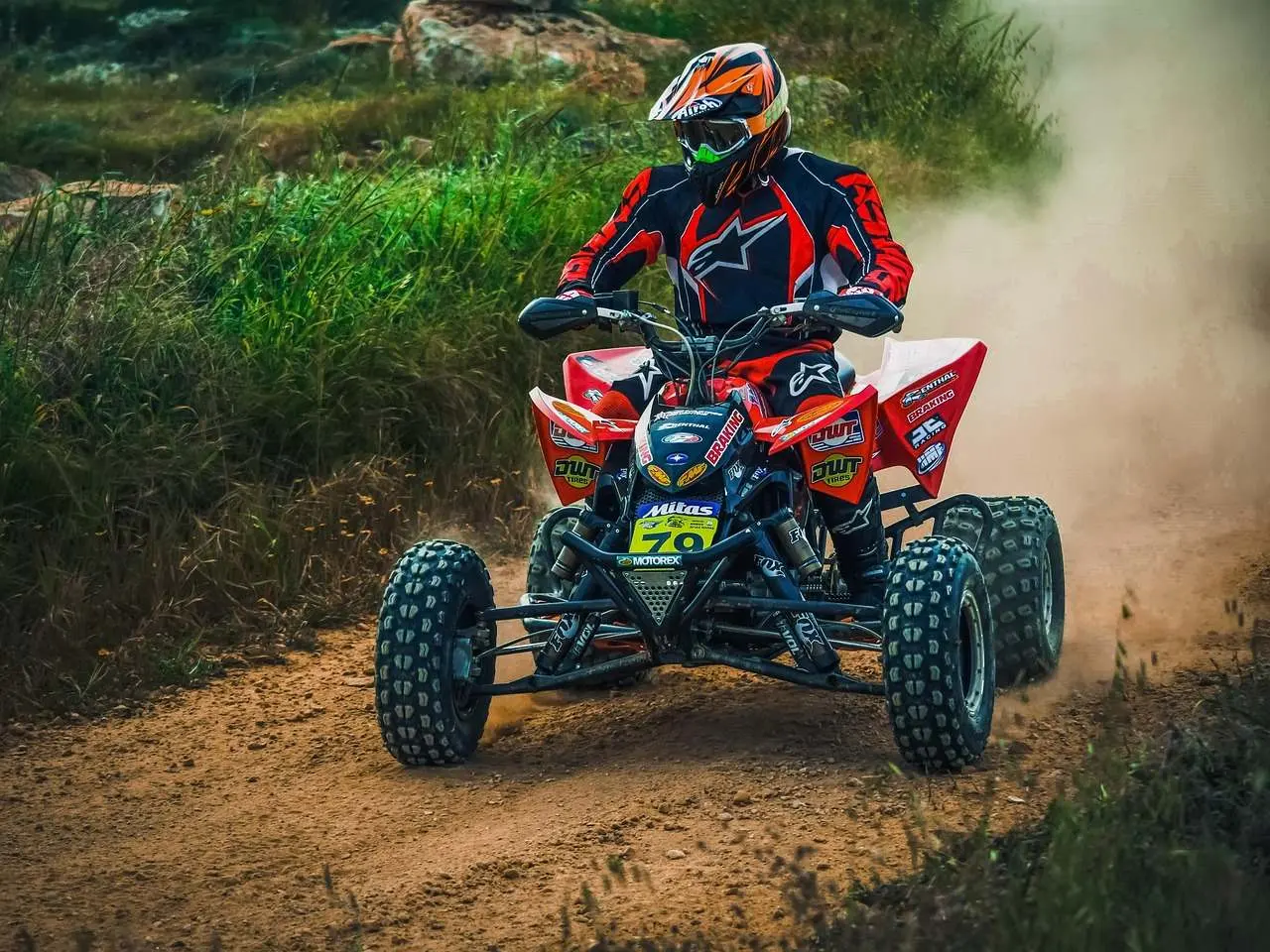
If you’re asking where can I ride my ATV, the answer is only on routes and areas open to your vehicle, so check signs and maps first. Rules differ by land manager and by state, so a quick check saves a wasted trip.
For the wider basics of handling and gear, start with our guide on how to ride an atv, then come back here for the access side.
| Item | Value |
|---|---|
| Land owned by the US federal government | Approximately 635 million acres |
| Width limit for ATV trails in Colorado | 50 inches or less |
| Symbols on Colorado route signs | Eight symbols |
| Forest Service travel management regulations | 2005 |
| Forest Service motor vehicle use maps | Updated annually |
These figures come from a Congressional Research Service report and from Stay the Trail’s trail-signs page. Figures and rules can change, so check the source before you rely on them.
Who decides where you can ride?
Access follows ownership. The federal government owns approximately 635 million acres of land in the United States, according to the Congressional Research Service report dated January 2013.
Two of the agencies that manage that land, the Bureau of Land Management (BLM) and the Forest Service, each decide how much OHV use is allowed in a given area through their planning processes. As of that January 2013 report, the BLM has been designating public lands as open, limited or closed to OHV use. The Forest Service has been designating roads, trails and areas open for OHV use and prohibiting OHV use outside the designated system.
The BLM’s own off-highway vehicle page says it regulates roads, trails and land under its jurisdiction to meet land management objectives, protect resources and provide public safety. It also states that all off-highway vehicles must comply with State regulations and restrictions, so your state’s rules sit on top of federal ones.
How to read trail signs and maps
On the ground, signs are your first guide. In Colorado, the Forest Service and BLM place standardized signs at the beginning of all motorized routes, according to Stay the Trail. Those signs use eight symbols, and a red slash through a symbol means the trail is closed to that use.
Seasonal closures may also appear on a sign, with the dates included. Other states may sign their routes differently, so treat Colorado as one worked example rather than a universal rule.
Maps matter just as much as signs. The Travel Management Rule announced in 2005 requires each National Forest and Grassland to identify the roads, trails and areas open to motor vehicle use, and that information is documented on motor vehicle use maps (MVUMs), as Stay the Trail explains.
- Forest Service land: use the MVUM to see which trails and roads are open to your vehicle.
- BLM land: follow the on-the-ground signs to see which trails and roads are open to your vehicle.
- If they disagree: the current year’s MVUM takes priority over the signs, since MVUMs are updated annually.
- Where nothing is designated yet: drive only on existing routes until designations are made.
The same page notes that the Forest Service and BLM guidance above applies to Colorado, and the CRS report confirms that the Forest Service continues to develop motor vehicle use maps based on its 2005 regulations.
Does your ATV fit the trail?
Machine size can decide whether a route is open to you. In Colorado, ATV trails are open to vehicles 50 inches wide or less, and most ATVs are under 50 inches in width, according to Stay the Trail.
Add wider aftermarket wheels and tires and the machine may no longer qualify for ATV trails. Stay the Trail says such a vehicle should only be used on trails open to full-size high-clearance 4WD vehicles.
Side-by-sides and utility terrain vehicles have no sign of their own. Under the same guidance, one over 50 inches wide may only use full-size high-clearance 4WD trails, while one at 50 inches or less may use ATV trails too.
Open areas, closed areas and sensitive habitat
Not every riding area is a trail. The BLM says “open” riding areas are posted, and that fenced areas mark sensitive wildlife and plant habitat and are “closed” to vehicle use, as described on its OHV page.
One example is Hubbard Mesa in Colorado, which the BLM lists as an Open Area designated in 2007 in the Roan Plateau Management Plan.
Wherever you ride, the BLM asks you to know where you are driving and to respect private property. It also asks you to stay well away from livestock, and from wildlife and their water sources.
A pre-ride checklist
A few minutes of homework answers most access questions. Work through these steps before you load the machine:
- Find out who manages the land: BLM, Forest Service, a state agency or a private owner.
- Check your state’s laws before riding OHV routes on public lands, as the BLM advises.
- Confirm registration with the appropriate State agency where required.
- Study the MVUM or the on-the-ground signs for the route you plan to take.
- Wear a protective helmet, which the BLM lists among its best practices.
- Stay out of fenced areas and obey posted signs.
If you ride with others, our notes on atv group riding etiquette explain how to share a route politely. For formal instruction, you can read about what an atv safety course offers.
For questions on licensing, insurance or the law, ask your state agency or a qualified professional rather than relying on a general guide.
Frequently asked questions
Can I ride my ATV on public roads?
Show answer
That depends on state and local law, which this guide does not cover. Ask your state’s responsible agency before you ride on any street or road.
What if a trail sign and the map disagree?
Show answer
On Forest Service land in Colorado, Stay the Trail says the current year’s MVUM wins when it conflicts with what is posted on the ground. See the Stay the Trail page for details.
Does my ATV need to be registered?
Show answer
The BLM says vehicles must be registered with the appropriate State agency where required. Whether your machine needs it is a question for that agency, as listed on the BLM page.
Do I have to wear a helmet?
Show answer
The BLM lists protective helmets as a recommendation for OHV riders. Any legal requirement is set by your state, so confirm it with the relevant authority.