Stuck on 4×4 vs 2wd atv? Match the drive to your ground: two-wheel drive covers graded, well-traveled terrain, while four-wheel drive adds traction on climbs, slippery surfaces and loose ground.
If you are still at the start of your search, the guide on how to buy an atv covers the wider decision.
| Item | Value |
|---|---|
| Setting for graded, well-traveled terrain | 2×4 is “completely fine” and saves a bit of fuel |
| Short pavement transport | 2×4 recommended |
| Speed range for 4WD | All speeds |
| 4WD LOW suggested for lower speeds | Below 20 mph / 30 km/h |
| Switching between 2WD and 4WD (Yamaha manual) | Stop the ATV first |
| Visco-4Lok front differential lock (if equipped) | Locks in milliseconds |
These figures come from Can-Am’s owner guidance on driving modes and a Yamaha owner’s manual page. Manufacturer advice can change and differs by model, so check the source and your own operator’s guide before you rely on it.
How 2WD and 4×4 differ on an ATV
The practical difference is which wheels receive engine power. Can-Am’s owner guidance says you engage the 4-wheel-drive switch to send engine power to the front wheels. Yamaha’s manual describes its 4WD position as supplying power to the rear and front wheels, as covered on the Yamaha page.
That makes the choice less of a permanent label on the machines these makers describe and more of a setting you select. When you compare models, find out whether the one you are considering is selectable or fixed in one drive mode, and read its operator’s guide to see how the switch works.
Yamaha’s page also mentions a differential lock switch that you can use while in four-wheel drive, chosen to suit the terrain and conditions. Can-Am describes a similar idea in its Visco-4Lok system, which, if equipped, locks the front differential in milliseconds at the push of a button.
When 2WD is enough
Can-Am says that on graded and well-traveled terrain, 2×4 is completely fine and even saves a bit of fuel. It also recommends 2×4 for moving the vehicle short distances on pavement, according to its driving modes page.
Two-wheel drive is a reasonable match if your riding looks like this:
- Graded tracks and well-used paths rather than rough ground.
- Short pavement transfers between one riding area and the next.
- A preference for the small fuel saving the manufacturer mentions.
The wording is “a bit” of fuel, so treat the saving as a minor bonus rather than the main reason to choose a drivetrain.
When 4×4 earns its place
According to Can-Am, 4WD can be used at all speeds and gives added traction for climbing, slippery conditions and loose surfaces. In that setting the rear of the machine tends to kick out less.
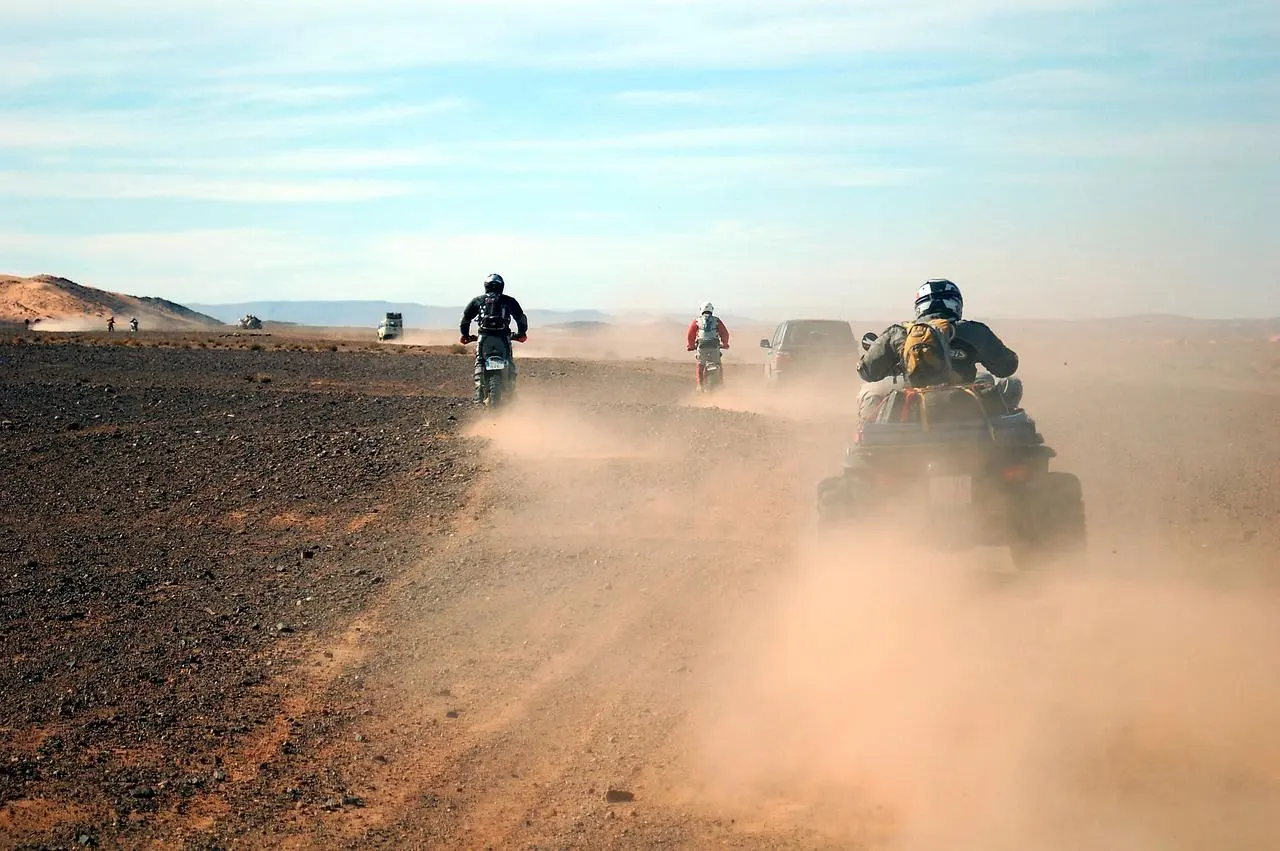
The same page adds a clear warning: four-wheel drive does not replace riding within your own limits and those of the vehicle. Extra grip changes where a machine can go, but it does not change how it behaves when you ask too much of it.
The page also encourages riders to explore these features safely and at their own pace as skills and familiarity grow. If you are new to quads, that is a sensible way to treat any drive setting.
Where does low range fit in?
Can-Am points to 4WD LOW for lower speeds below 20 mph / 30 km/h, mud riding, rough trail and loading onto a trailer. Its stated reason is that the setting maximizes power and control at lower speeds, as described in the same guidance.
If your riding includes slow, difficult ground, check that a model offers a low setting before you commit. Not every machine will list the same features, so the operator’s guide for the exact model is the reliable reference.
How to choose for your riding
Work through a short checklist before you compare prices:
- List where you ride most often: graded tracks, pavement transfers, climbs, mud or loose surfaces.
- Compare that list with the manufacturer guidance above, which ties 2×4 to easy ground and 4WD to demanding ground.
- Check whether the model has a selectable drive switch, a low setting or a differential lock.
- Ask the dealer or read the operator’s guide to learn how each control is meant to be used.
Drivetrain is one part of the decision, and the guide on what size atv engine do i need covers the power side. If you are weighing a pre-owned machine, the comparison of new vs used atv choices covers the wider trade-offs.
Frequently asked questions
Can I change drive mode while the ATV is moving?
Show answer
Yamaha’s manual excerpt says no: it tells riders to bring the machine to a halt before selecting a different drive setting, because handling can change unexpectedly. Follow the instructions for your own machine.
Does 4×4 stop an ATV from sliding?
Show answer
Not entirely. The manufacturer says the tail tends to kick out less, but also that four-wheel drive is no substitute for riding within your limits.
Is a 2WD setting fine for loading onto a trailer?
Show answer
Can-Am’s guidance names trailer loading as a job for 4WD LOW instead, so check the operator’s guide for your model before you load.
What does a differential lock do?
Show answer
Yamaha’s manual describes a switch that locks the differential gear when the machine is in four-wheel drive. Can-Am’s Visco-4Lok is an example of a front differential lock on its ATVs, when fitted.
Which drivetrain should I buy?
Show answer
Base the decision on the ground you ride, then confirm the controls and features of the specific model with a dealer or its operator’s guide. For questions about licensing, insurance or local rules, ask the relevant authority or a professional.